

How to Sell Cattle Online: What Actually Works in Today's Market

Selling cattle online has changed dramatically over the last decade. What used to be a simple process of posting a photo and a pedigree has evolved into a full-scale marketing strategy that blends storytelling, branding, and visual presentation.
Today’s buyers are making faster decisions, often from a catalog page, a Facebook post, or a video before they ever step foot on a farm. Because of that, how you present your cattle online can directly impact not only whether they sell—but what they sell for.
Over time, we’ve learned some hard lessons, refined our approach, and built a marketing style that fits our operation rather than chasing what everyone else is doing.
Here’s what we’ve learned about selling cattle online—and what actually makes a difference.
Don’t Lose Your Voice Trying to Be the “Big Dogs”
One of the biggest mistakes we’ve made is trying to replicate what larger, more established operations are doing online.
When you’re striving to be a top breeder, it’s natural to study the people already there. That inspiration is valuable—but it can also pull you away from your own identity if you’re not careful.
We’ve learned that you cannot lose your voice in the process.
Every operation has something that makes it unique. For us, that means honoring a long-standing, traditional Hereford program while still adapting to modern marketing. My husband tends to have a very straightforward, traditional style in how he evaluates and describes cattle. I tend to approach marketing in a more visual, storytelling-driven way.
While we don’t always agree on presentation, the results speak for themselves. His dry, factual style doesn’t always stop the scroll. More polished, visual storytelling often does.
The key is balance: inspiration from others, but execution that stays true to your brand.
Case Study: When You Know an Animal Deserves More
A great example of this approach was the high-selling bull we marketed at the 2026 Kentucky Beef Expo. He went on to be the second-highest selling lot in the entire sale.
We didn’t treat him like every other animal.
Instead, we built a full marketing series around him:
High-quality photos that highlighted his best traits
Carefully written copy explaining why we backed him
A teaser video that told his story and built anticipation
A full video showing him moving and displaying his structure
This type of marketing doesn’t get used on every animal. And that’s intentional.
We simply don’t have the time to market every single lot this way—and honestly, it wouldn’t work if we did.
But when people see that level of effort, they pay attention. They know this is not just another post. It signals that this is an animal worth studying.
That is where marketing becomes powerful: it creates focus, urgency, and curiosity.
It makes people ask, “Why are they putting so much behind this one?”
And that question drives engagement, inquiries, and ultimately, competition in the sale ring.
Three Core Principles for Selling Cattle Online
If we had to narrow everything down into a few foundational principles, these are the three we come back to consistently.
1. Stand Behind Your Product
Every animal has faults. That’s part of livestock production.
Over time, we’ve learned to shift our focus away from highlighting every weakness and instead emphasize the strengths that matter most. My husband, like many breeders, has a tendency to see every flaw first. But we’ve worked hard to shift that mindset when marketing.
Buyers don’t need perfection—they need honesty paired with confidence.
When you stand behind your cattle and focus on what they can do and what they are best at, buyers respond to that confidence.
2. Stick to Your Brand Voice and Style
Brand consistency matters more than most people realize.
Our main operation has been around for 130 years. It carries a traditional, respectful tone in everything we do. We use muted colors, professional language, and a more classic presentation style because that fits who we are.
At the same time, I also help market a younger, more modern operation focused on club pigs. That brand uses bold colors like lime green and a much more edgy, attention-grabbing style. It works because it fits their audience of young exhibitors.
Neither approach is wrong—they are just different brands serving different markets.
The mistake is trying to be everything at once.
Your marketing should feel consistent, recognizable, and intentional. When someone sees your post, they should immediately know it’s yours.
3. Invest in Professional Presentation
This is one of the biggest separating factors in online cattle sales.
If you can hire a professional photographer and videographer, do it. High-quality visuals are no longer optional in a competitive market.
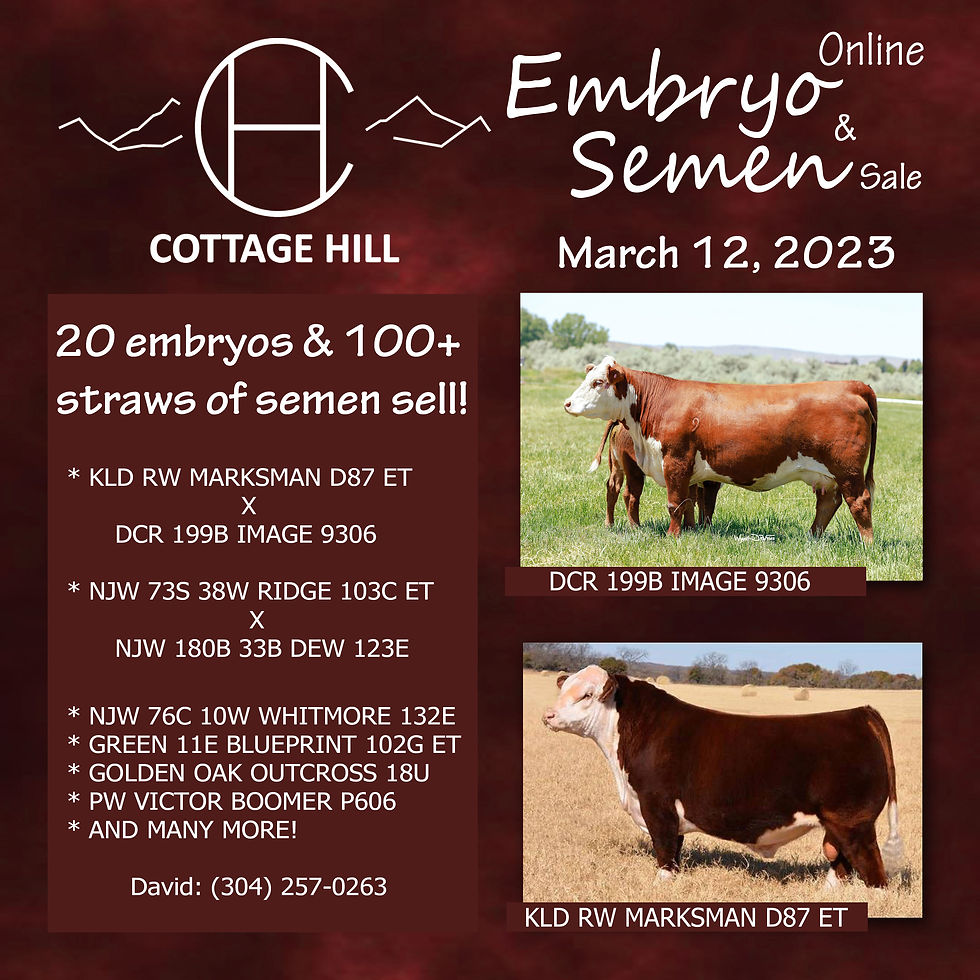
If you cannot, then use tools that help elevate what you have. Even average photos can be improved with proper backgrounds, clean templates, and intentional design. Tools like The Branded Mountain Design Studio allow producers to take basic images and turn them into something that properly showcases the animal.
One thing we strongly believe is this:
A picture is not better than no picture at all, if it does not show the animal correctly.
Too many producers underestimate how quickly a poor image can get them overlooked entirely.
In a digital marketplace, presentation is often the first filter buyers use. If the image doesn’t stop them, the genetics never get a chance to speak.
How Online Selling Has Changed
Over the last 10–15 years, selling cattle online has shifted dramatically.
Even live auctions are moving toward video-style sale rings. More and more cattle are being purchased sight unseen based on online catalogs and video.
Photos and videos are no longer supporting content—they are the sale.
Social media hasn’t replaced farm visits completely, but it has changed their role. Instead of introducing a buyer to your program, it now determines whether they ever make the trip at all.
Buyers are using online content to narrow decisions long before they ever step on the farm.
Because of that, presentation has become more important than ever.
A Hill We’re Willing to Die On
At the end of the day, we believe strongly in this:
Presentation is key to selling cattle and maximizing profit.
Not because it replaces quality—but because it reveals it.
Good cattle still need good marketing. Without it, even the best genetics can be overlooked in a crowded digital marketplace.
Presentation doesn’t create value where none exists, but it absolutely determines whether that value is recognized.
And in today’s cattle industry, recognition is everything.
Final Thoughts
Selling cattle online isn’t just about posting photos anymore. It’s about building trust, telling a story, and making sure the right buyers stop long enough to see the quality you already know is there.
Stay true to your brand. Be intentional with your best cattle. And never underestimate the power of presentation.
That combination is what turns good cattle into sought-after cattle.
Interested in taking the next steps? Head over to our Services page to see how we can help you further your operation's goals.

Comments